The Matthew Transmissions
The Descended
Hip-hop angels, descended to witness.
A four-album series told from the point of view of angels sent down to witness the Gospel of Matthew - a focal angel broadcasting back what it sees.
Hip-Hop/Rap
Transmission 01
Album 1: The First Transmission
Matthew 1 - 715 tracks
The signal is established. Fifteen tracks trace an everyman from rootless to transformed as the witness takes shape and, at the finale, the first transmission is sent.
Behind the transmission
How the videos are made
Every video is built the way a small film crew would build it, except most of the crew are AI programs and one person, the producer, makes every decision that matters. Nothing that costs money runs until a free check has passed and a human has said yes.
01
The song comes first
Every song is tied to a passage from the book of Matthew. The lyrics are written with an AI songwriter that works under a locked description of the project's voice: its vocabulary, its tempo range, the things it never says. A second AI reads each finished lyric blind and scores it, and only the lyrics that survive are recorded. Suno, an AI music service, generates several takes from the finished words, and the best one is chosen by ear.
02
The computer listens to the song
Before anyone thinks about pictures, a program maps the recording: the tempo, every beat, every section, and the exact moment each line is sung. That timing map is the backbone of everything that follows. It decides where every cut lands, how long each shot has, and when each lyric appears on screen.
03
An AI director writes the shot list
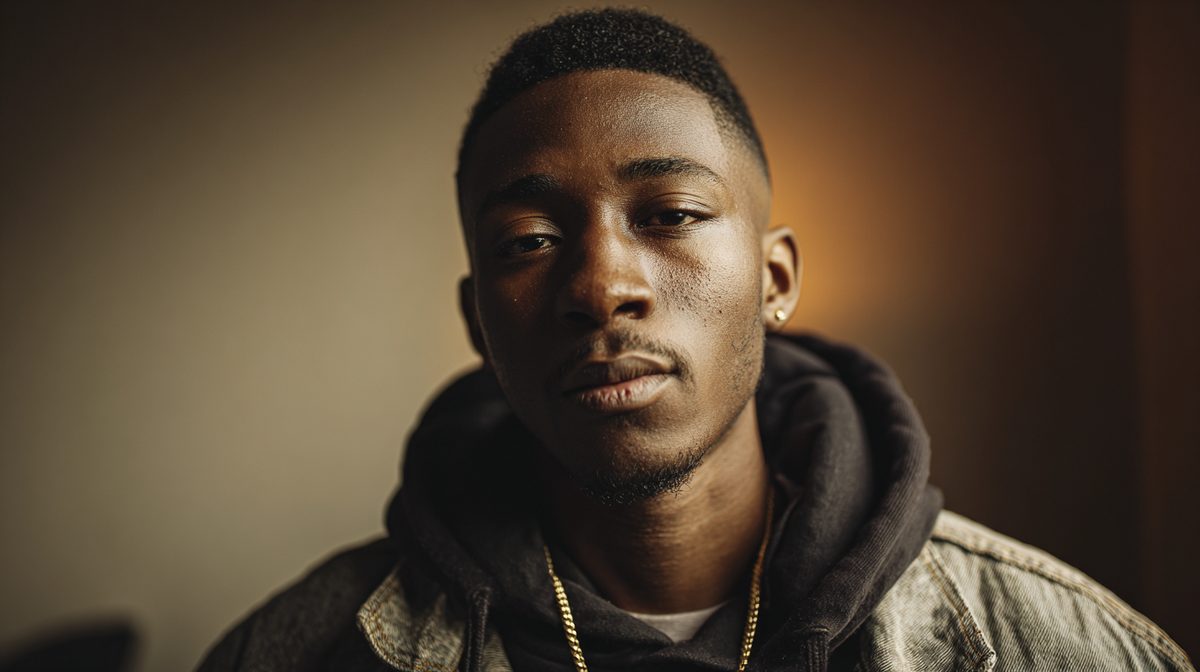
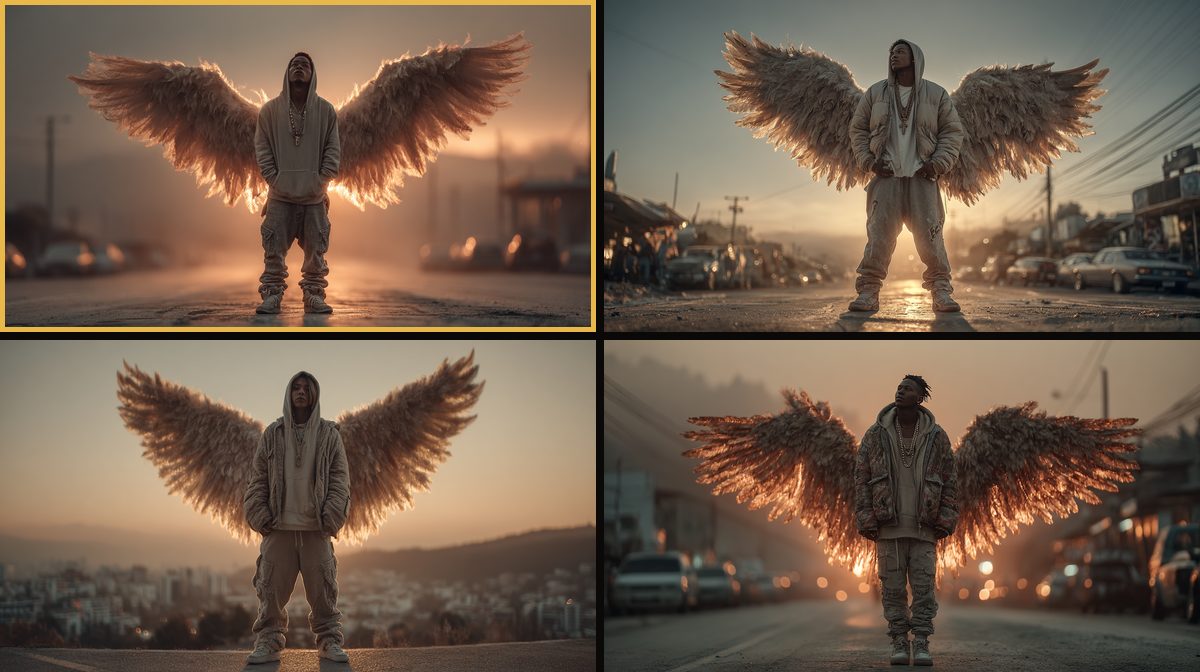
The director reads the lyrics, the timing map and the album's story notes, then writes thirty to forty shots for a three-minute song, each pinned to the beat: what happens, who is in it, how the camera is framed and how it moves. It works from a rulebook, not a blank page. The main characters have locked portraits so the same faces appear in every video, and the angel shows his wings only when he is alone.
04
A second AI critiques the plan
A quality checker reads the plan cold, without the director's reasoning, and hunts for repeated shots, unnamed figures and continuity slips. The director fixes what it finds, up to three rounds, and then a human looks. All of this is free, which is the point. It is far cheaper to argue over a text file than to re-render pictures.
05
Still pictures, four per shot
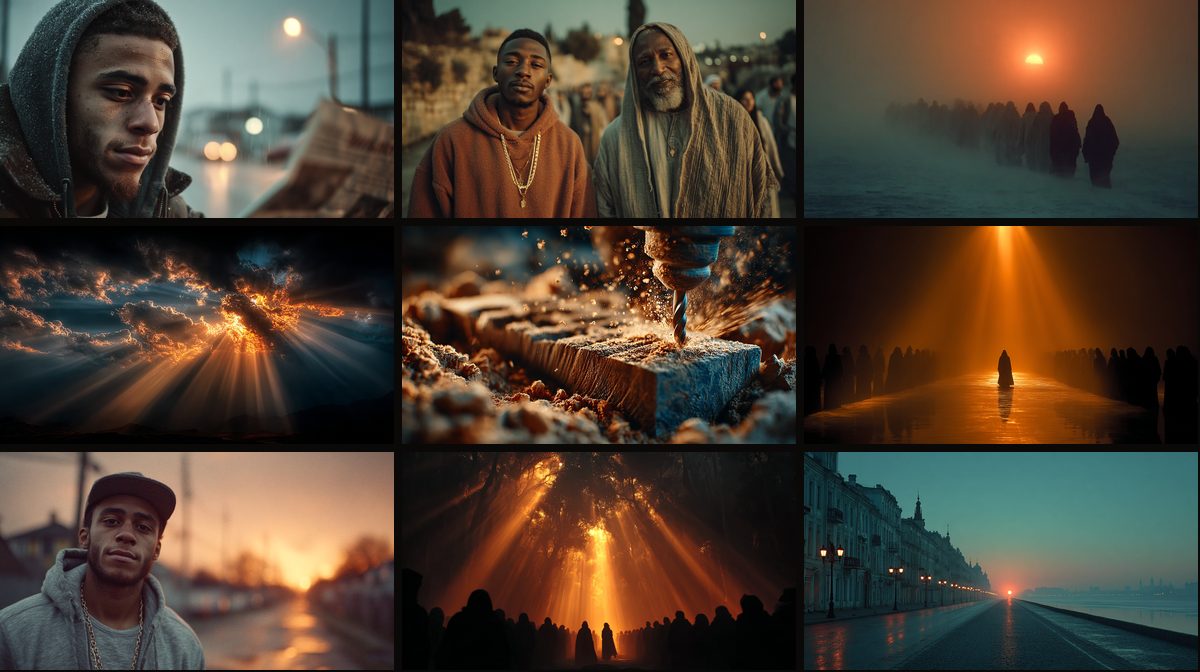
This is the first step that costs money, and it is kept cheap on purpose. Each shot's description goes to an image model with the locked portrait of whoever is in it, and four candidates come back. The checker ranks them against the plan and locks the best one as the keyframe: the exact first frame the moving clip will grow out of.
06
The human storyboard review
Every locked picture is laid out in order like a storyboard, one card per shot. The producer swaps shots for another candidate, sends some back with a note, and clicks approve. The expensive next step refuses to run without that approval. The AI can tell whether a picture matches the plan. Only a person can tell whether it is the right picture for the song.
07
The pictures start to move
Each approved keyframe is handed to an AI video model with its shot description and animated into a clip of five to ten seconds. Three different models are used depending on the kind of shot: one for performance, one for physical action and singing, one for scenery. Every clip is rendered at least as long as its slot in the song, never shorter, because nothing ships off its natural speed.
08
Checking the clips
Video models make mistakes that are easy to spot and hard to predict: a sixth finger, a stray logo on a jacket, a second person wandering into a solo shot. A vision model watches every clip against its brief and the producer spot-checks the frames by eye. Clips that fail are redone, and if the flaw was already in the still picture, the picture is repaired first.
09
The cut
With every clip approved, the video is assembled from the timing map so each cut lands on the beat the plan chose. A polish pass evens out the color and adds a light film grain so clips from three different models sit together as one piece. The lyrics are laid on screen line by line, and the finished cut is sharpened to 4K overnight with the full-quality master underneath.
10
The phone versions and the shorts
A widescreen video cropped to a phone screen looks like exactly that, so the vertical versions are not crops. The director recomposes every shot for a tall frame, and the pictures and clips are made again. Shorts are cut from that vertical master and point back at the full album playlist, so one tap starts the whole album playing in order.
11
Release
The title, description, chapters, captions and thumbnail are generated from the same project files rather than typed by hand. The captions carry the real words, and the chapters follow the song's real sections. Then the video premieres on YouTube, and the numbers are watched from there.
The machines do the volume. The person does the judgment and holds the wallet.
Signal
Watch
New transmissions land on YouTube first, then across every major streaming service.
On Spotify, Apple Music, and all major streaming services via DistroKid.